Vocabulary:
Principle 5: Effective Teachers Address Standards
Principle 6: Effective Teachers Scaffold Students’ Reading and Writing
Scaffolding: Demonstrating, guiding, and teaching to provide the right amount of support according to instructional purpose and students’ needs.
- 5 levels of support (from most-least)
- Modeled
- Shared
- Interactive
- Guided
- Independent
- Shared Reading: reading big books with young children
- Shared Reading: Teacher does most of the reading while students follow along and chime in to read familiar and predictable words and phrases.
- Can also be done with older students
- Language Experience Approach (shared): Recording children’s translation of art, reading, etc.
- Choral Reading (Interactive): Students take turns reading lines of a poem
- Students are supporting each other by sharing the work
- Readers Theatre (Interactive): Students take on roles of characters and read the lines of their character
- Interactive Writing (Interactive): Creating a text as a class and writing a message
- Interactive Writing is used for:
- Practicing reading and writing high- frequency words
- Applying phonics and spelling skills
- Reading and writing texts that students can’t do independently
- Having students share their literacy exercise with classmates
- Interactive Writing is used for:
- Mini Lessons (guided): After teaching a lesson and giving strategies and skills, teachers provide practice activities so students’ can apply what they are learning.
- Guided Reading: With continued support, student’s do all reading themselves
- Small groups of children at similar reading level meet with the instructor. Instructor guides reading and introduces book.
Principle 7: Effective Teachers Organize for Instruction
Literature Circles: Small groups of students gather to read a story.
- Teacher begins by choosing 5 or 6 books of varying levels that meet all students’ needs. After an introduction of each book, each group chooses a book to read and discuss
- This helps students develop responsibility for completing a task.
Principle 8: Effective Teachers Differentiate Instruction
Differentiation: Adjusting instruction because students vary in levels of development, achievement, and ability
- Based on Vygotsky’s idea of ZPD.
- One size fits all DOES NOT apply in the classroom
- If instruction is either too hard or too easy, it is not effective
- Differentiation is done by choosing different materials, delivery methods, assignment modification, etc.
- Differentiating the Content: Teachers identify info that students need to learn to meet standards.
Differentiating the Process: Vary instruction and application activities to meets students needs - Differentiating the Product: Teachers vary how students present what they’ve learned (Assessments, projects, etc.)
- Differentiating the Content: Teachers identify info that students need to learn to meet standards.
Principle 9: Effective Teachers Link Instruction and Assessment
Nurturing English Language Learners: Having ELL’s participate in mainstream instructional programs
- Teachers Scaffold oral language acquisition and literacy development by:
- Explicit Instruction: Presenting additional instruction on strategies and skills
- Oral Language: Teachers provide many opportunities for ELLs to speak English comfortably and informally in partners or small groups to relieve pressure
- Small Group Work: Teachers provide many opportunities for small group work to support learning with social interaction.
- Reading Aloud to Students: Reading all sorts of text aloud to model fluent reading
- Background Knowledge: Organizing instruction into themes to build students’ literary knowledge through mini lessons
- Authentic Literacy Activities: Allowing and providing opportunities for students to apply strategies and skills in real life purposes.
Assessment: Ongoing part of learning and teaching. Daily part of classroom life where teachers collect and analyze data from observations, tests, and conferences to make plan for students’ academic achievement and to plan interventions
- Assessments occur for these puposes:
- Determining Instructional Levels
- Monitoring Progress
- Diagnosing Students’ Strengths and Weaknesses
- Documenting Learning
Running Records: Used to analyze a students’ ability to solve reading problems while orally reading
Linking Instruction and Assessment:
- Assessment Cycle:
- Step 1: Planning
- Step 2: Monitoring
- Step 3: Evaluating
- Step 4: Reflecting
- Rubrics: Assesses students’ performances, written products, and multimedia projects
Figure 1-5: Levels of Scaffolding
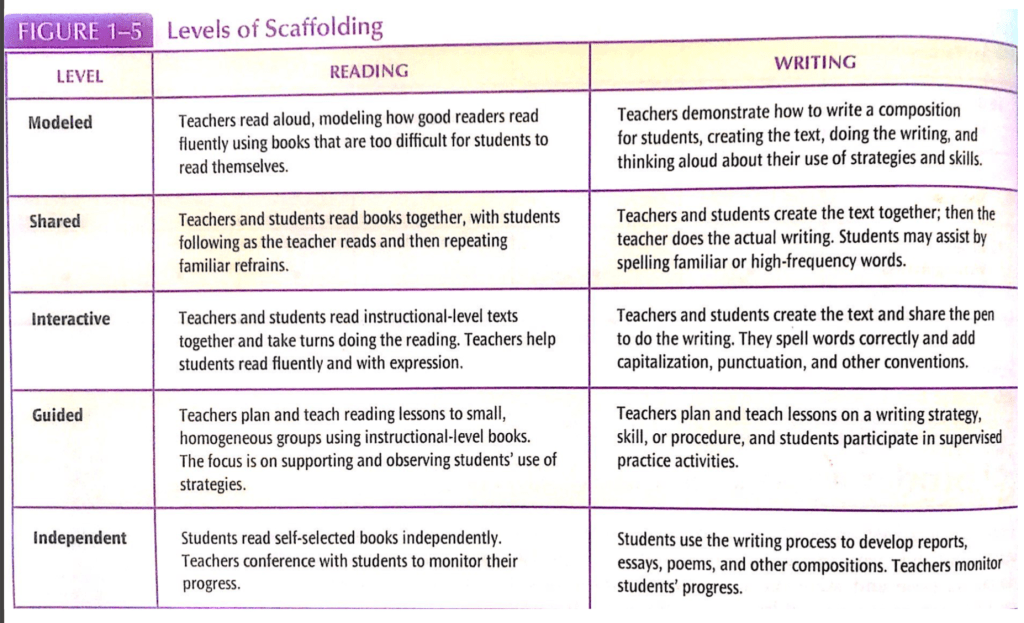
Figure 1-6: Technology in the Classroom
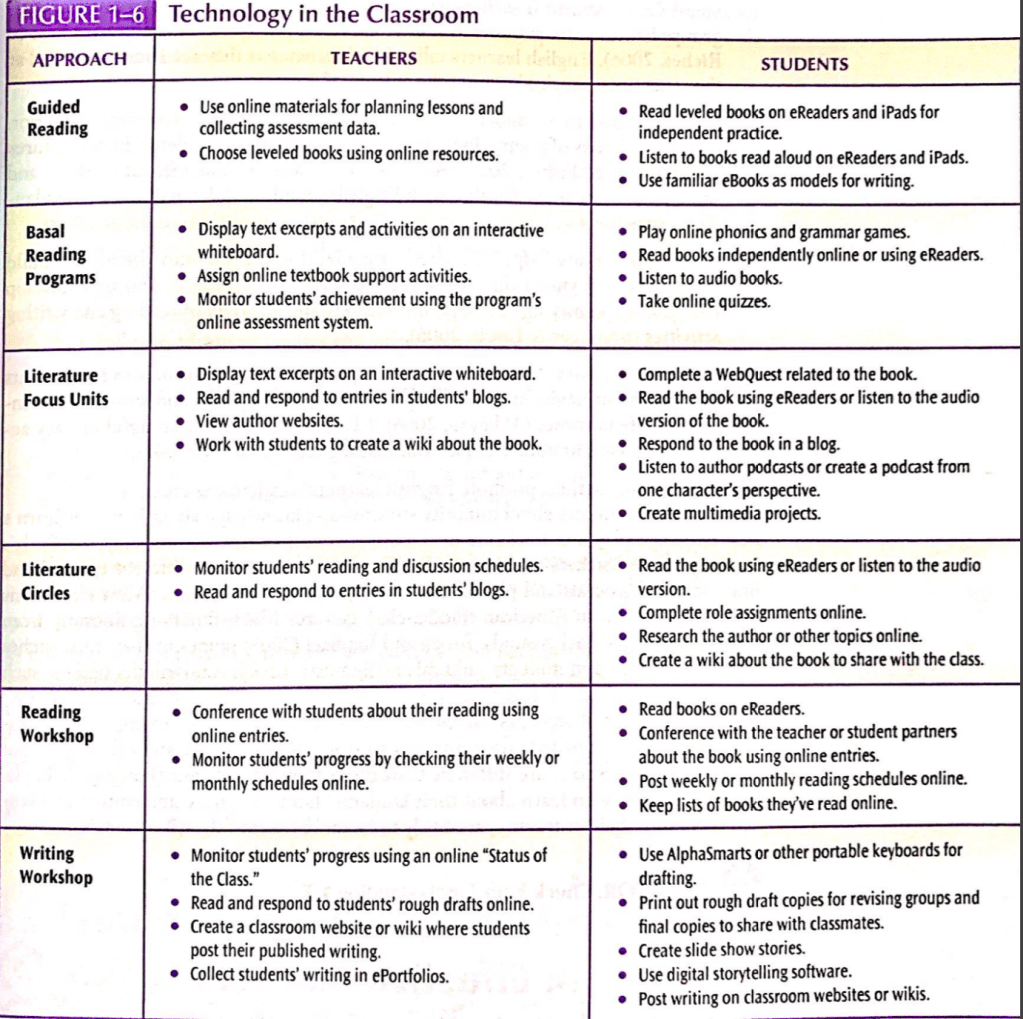
Figure 1-7: Ways to Differentiate Instruction
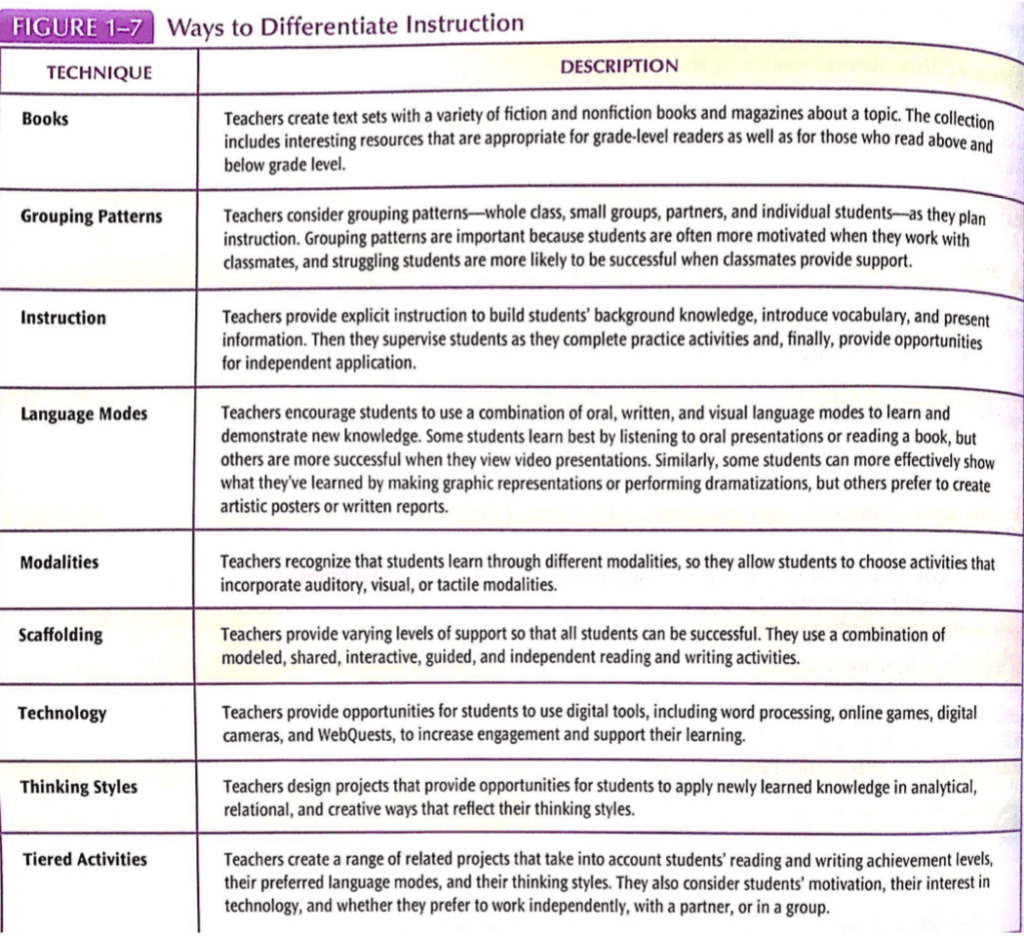
Classroom Connection: I found the tables in the second half of Chapter 1 to be very useful. I think they would come in handy in the future to refer back to when needed.
 Macy Bombard- ENGED Blog
You’ve covered the content and included classroom application. However, you’re missing the video summaries.
LikeLike
Thank you for noticing that! I thought I added the videos and my summaries in from my word doc, but I must not have. I made sure to do that this morning.
LikeLike